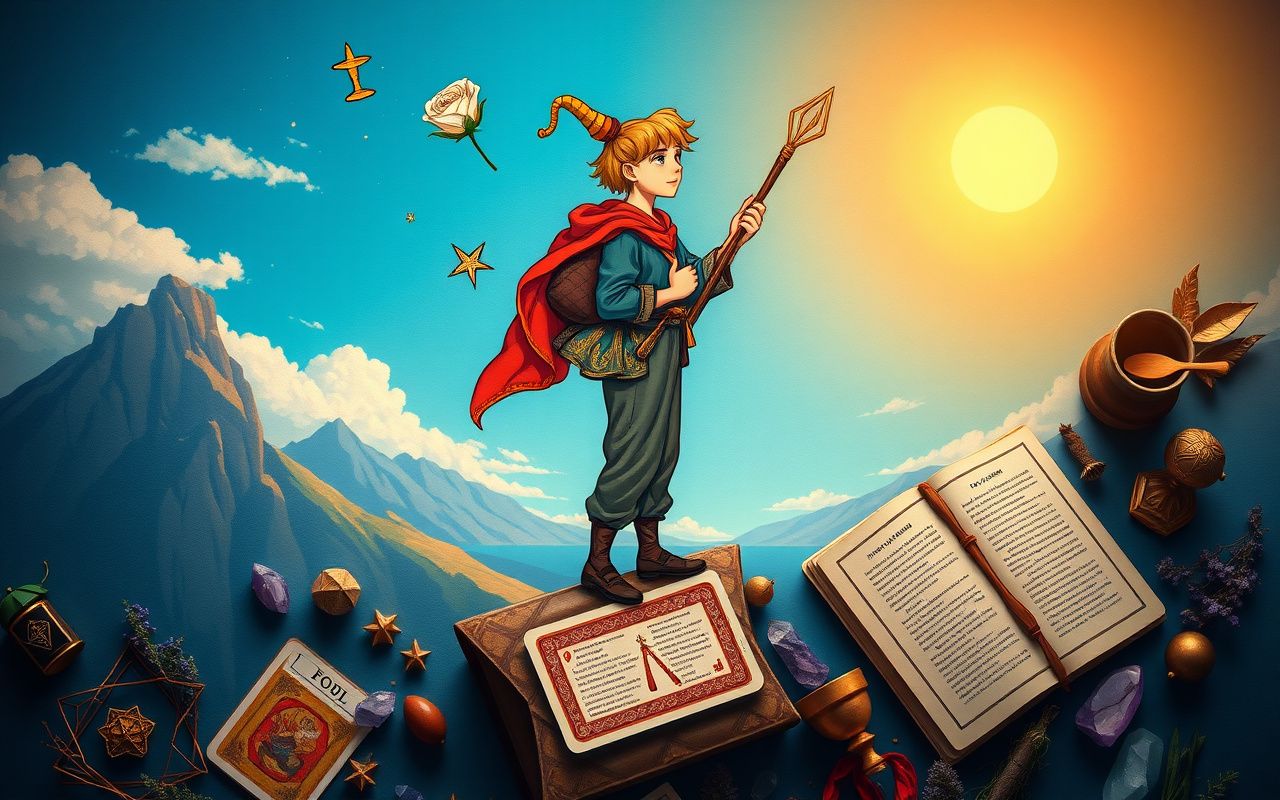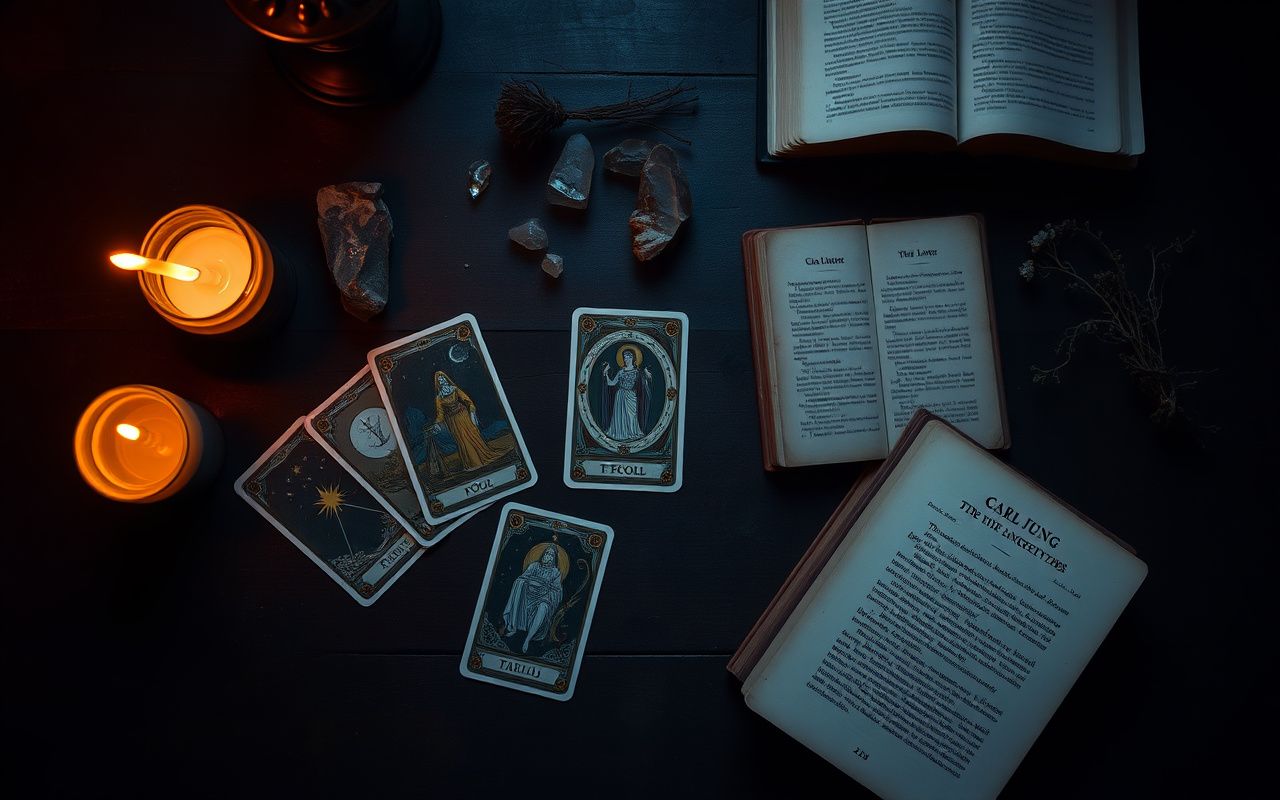
I remember the first time I held a Tarot deck. The images felt strangely familiar, like faces I'd known in a dream. Years later, I discovered why: according to Carl Jung, these cards tap into something he called the collective unconscious. In his view, the human mind carries ancient patterns, or archetypes, that show up in myths, stories, and yes, in Tarot.
Jung described the collective unconscious as a kind of universal memory, a residue of experiences from the dawn of time. He wrote that archetypes are like rulers, gods, or dominant laws that shape how we experience life. They appear in every culture: the mother, the father, the wise old man, the hero, the devil. Tarot, with its 22 Major Arcana, offers a structured way to meet them.
What Are Archetypes, Really?
Jung believed archetypes are not just ideas, but energetic cores that influence our thoughts, feelings, and behaviors. They emerge in dreams, fantasies, and moments of strong emotion. Think of the last time you felt a surge of courage or faced a shadowy fear. You might have been brushing up against the Hero or the Devil archetype.
Historically, the concept of archetypes predates Jung. Plato spoke of ideal forms, and ancient myths are filled with recurring character types. But Jung gave them a psychological framework. In his 1934 essay "Archetypes of the Collective Unconscious," he argued that these patterns are inherited, not learned. They are the software of the psyche.
For Tarot readers, this means each card is a doorway. The Fool is not just a picture of a man stepping off a cliff. He is the archetype of the innocent beginner, the one who trusts the unknown. The High Priestess is not a mysterious woman in a temple. She is the guardian of hidden knowledge, the inner voice we sometimes ignore.
Tarot's 22 Steps to the Self
In Jungian terms, the Major Arcana represent a journey of individuation, the process of becoming whole. Each card is a stage, a lesson, a challenge. The journey is not linear. It spirals. We meet the same archetypes again and again, but each time they show a new face.
Take the archetype of the Great Mother, which Jung linked to six cards: The Star, Strength, The Empress, The High Priestess, Justice, and Death. These cards resonate strongly during early childhood (birth to age one), again in the late twenties, and later in old age. But they do not disappear in between. They just shift. In your thirties, the Empress might represent nurturing your career. In your fifties, she might call you to nurture yourself.
I find this idea deeply comforting. It suggests that the cards are not predicting a fixed future, but reflecting timeless patterns we all walk through. They are mirrors, not maps.
How to Work with Archetypes in Your Readings
If you want to explore Tarot through a Jungian lens, here are a few practices I have found useful. First, do not rush to memorize meanings. Instead, sit with one card and ask: what myth does this remind me of? What character in a story or movie feels similar? The Emperor might recall a stern father or a wise king. The Moon might echo a folktale about illusions.
Second, keep a dream journal. Jung saw dreams as direct messages from the unconscious. If you dream of a mother figure, look to The Empress or The High Priestess. If a shadow chases you, consider The Devil or The Tower. The connections can be startling.
Third, read the cards as a narrative. Lay out the Major Arcana in order and tell yourself the story. The Magician (skill), The High Priestess (intuition), The Empress (abundance). It is the hero's journey, a pattern Joseph Campbell described in "The Hero with a Thousand Faces."
Some practitioners believe that by consciously engaging with archetypes, we can understand our own patterns. I am not sure if it is magic or psychology, but I know this: when I pull The Hermit, I feel a quiet call to turn inward. When I see The Star, I remember hope. And that feels real, whether you call it archetype or something else.
For entertainment purposes only.