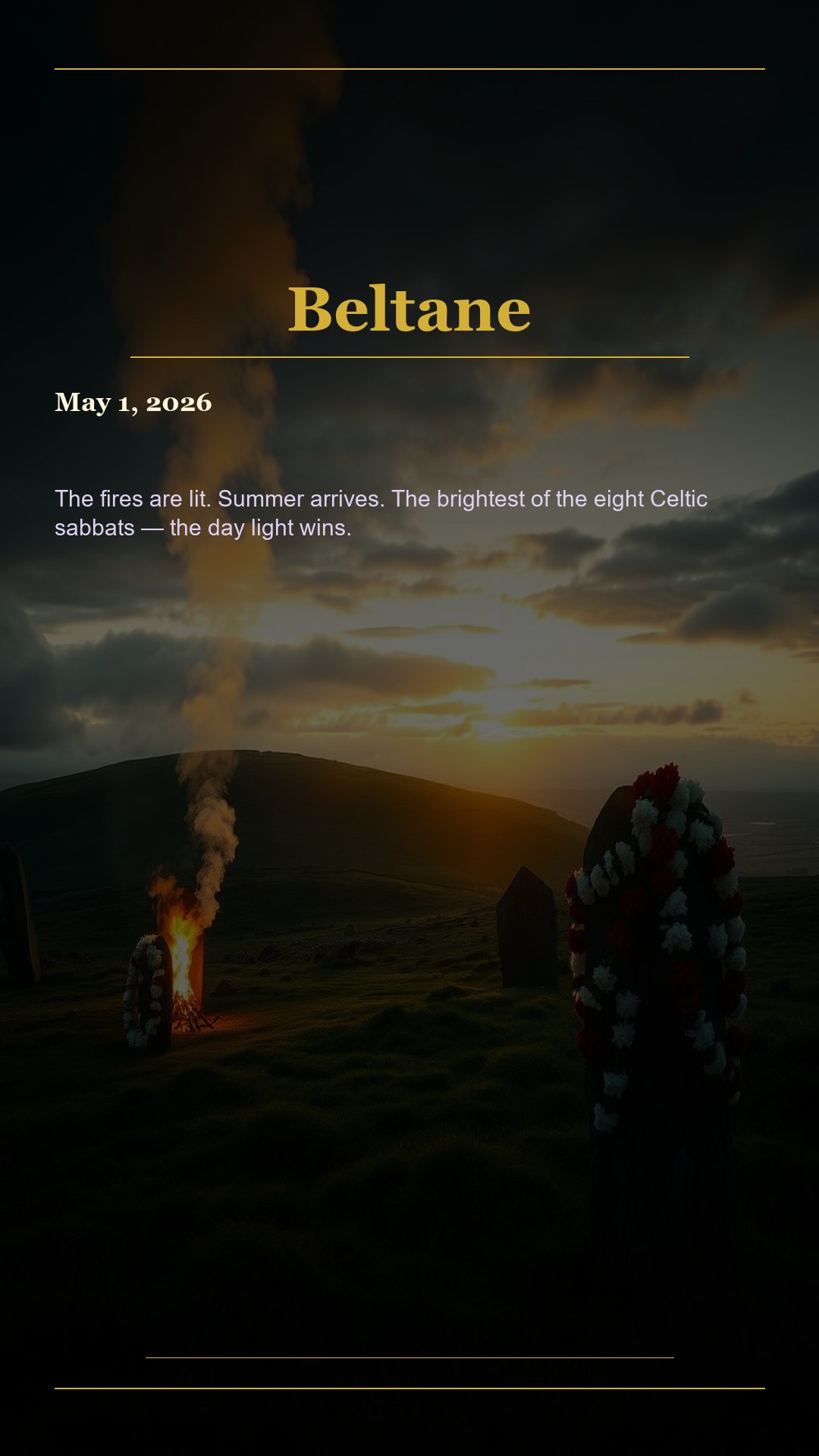
Beltane is the loudest, brightest sabbat in the Celtic year. May 1, the gateway to summer. The name comes from Old Irish Beltaine — "bright fire" — and that's exactly what it is: the day the cattle were driven between two great bonfires for purification, the day flower garlands went up over every doorway, the day young couples disappeared into the woods together with everyone's blessing.
Where most pagan thresholds are introspective, Beltane is celebratory and outward. It pairs with Samhain on the opposite side of the wheel — the two halves of the Celtic year, summer-half opening at Beltane, winter-half opening at Samhain six months later. Of all eight sabbats, Beltane is the sunny one.
Beltane Follows Walpurgis for a Reason
Walpurgis Night (April 30) was for releasing. Beltane (May 1) is for creating. The two-night sequence is intentional: clear the field, then plant. What you let go of last night by candle and juniper smoke is replaced today by what you actively choose to grow.
Folk-magic logic across pagan Europe: anything started on Beltane has the power of the rising sun behind it for the entire summer. Marriages, businesses, gardens, art projects, returns to studies — all carry unusual luck if launched today.
The Three Beltane Practices Anyone Can Do
1. Beltane Water
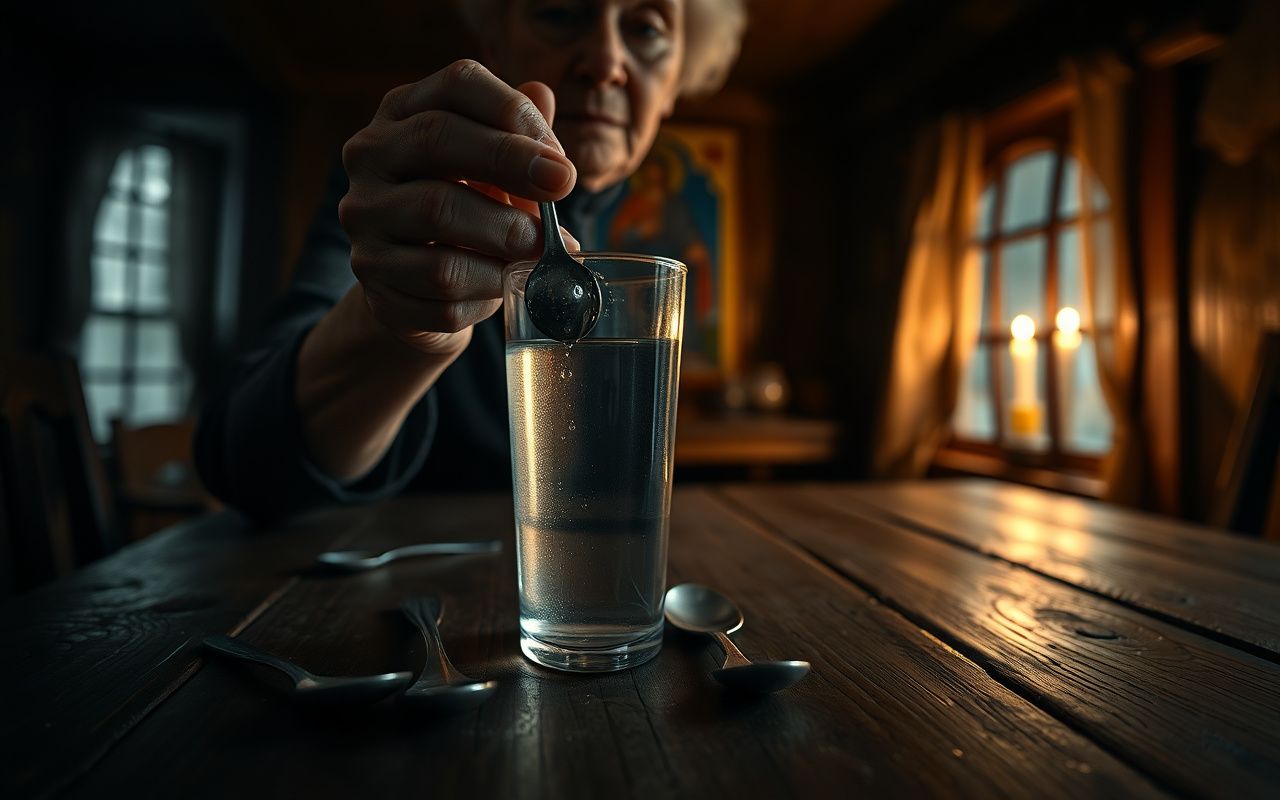
Water collected at dawn on May 1 is, in the European folk tradition, the year's most blessed water. Cottagers in Scotland and Ireland would walk to a holy well or even a clean stream before sunrise and bring back a vessel for the family. The water was used for the year's healing — bathed wounds, sprinkled on the threshold, drunk for clarity.
Modern version: fill a glass with cold water before sunrise, leave it on the windowsill until the first light hits it, drink it slowly. It is not symbolism. The body remembers ritual.
2. Flower Crowns and Garlands
The doorways were dressed with hawthorn, primrose, marsh marigold — anything yellow or white, the colours of returning sun. The threshold protection that Walpurgis sealed last night is reinforced today by flowers: a literal welcome to summer's energy, a refusal to invite anything heavy.
You can keep this small. One sprig of any flowering thing on the door frame is enough. The body remembers.
3. The Beltane Seed
Plant one thing today — a seed in soil, an idea on paper, a project in your calendar — that you want to be harvesting by Lughnasadh (August 1, the first harvest sabbat). Three months from today.
This is the practical magic of Beltane: while the energy is rising, plant. The structure is what matters. Write the seed down in three sentences, put it somewhere you'll see it, and let summer carry it.
The Maypole
The most visible Beltane tradition that survived into modern Britain. A tall pole, ribbons in seven colours, dancers winding the ribbons together as they circle. The pole was the world tree, the sky-axis. The winding was the binding of fates for the summer.
You don't need a maypole. Tying seven ribbons (any colours) on a tree in your garden, naming each one for something you want this summer, is a complete Beltane ritual.
One Last Thing
Beltane is not a serious sabbat. The witches who survived were the ones who knew when to release (Walpurgis, Samhain) and when to celebrate (Beltane, Litha). Today is the second kind. Wear flowers. Drink the water. Plant the seed. The year has just become summer.