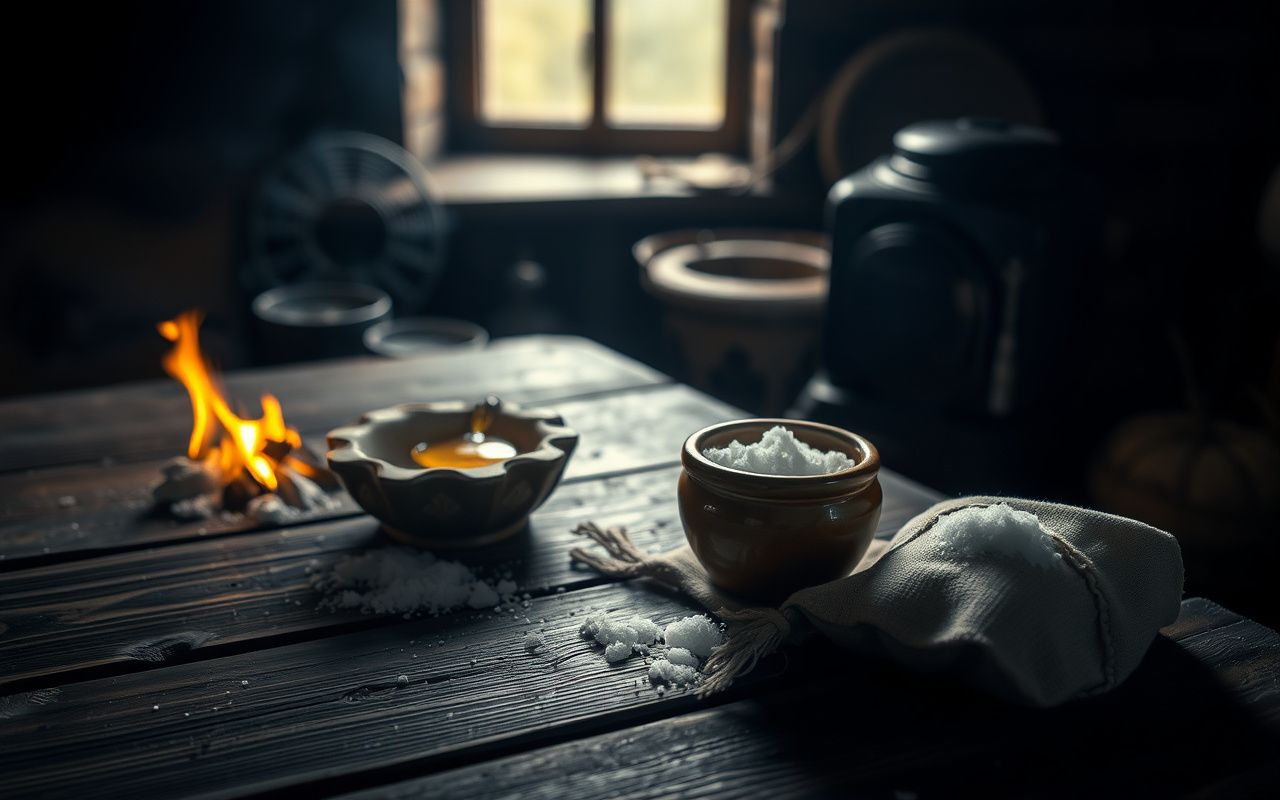
In 19th-century Russia, traveling merchants often carried small pouches of salt or lumps of honey. They believed these items, when properly prepared, could draw buyers to their stalls. I first came across this practice in a collection of folk customs from the Tver region, where a trader described smearing honey on his wrists before market day. The idea stuck with me. There is something charming about the image of a merchant treating his wares almost like a beehive, hoping customers would swarm.
The Honey Spell: Attracting Buyers Like Bees
According to old Slavic folk magic, honey holds a special connection to abundance. One ritual, recorded in early 20th-century ethnographic notes, involves taking a spoonful of honey and whispering a charm over it three times. After each recitation, the practitioner would spit over the left shoulder. The charm goes something like this: "As the bees, God's workers, rejoice in honey, so may the trading folk rejoice in my goods. May merchants flock, may goods fly off. Money into my purse. Words are locked. Amen."
The honey was then dabbed on the temples before heading to work. I have always wondered why the left shoulder. Some folklorists suggest it is a gesture to ward off evil spirits, who were thought to lurk on the left. Others say it is simply a way to seal the spell. The ritual was meant to be kept secret. Telling others would break the charm.
Salt and Sugar: Talismans for Prosperity
Salt appears in many trade-related folk practices. One tradition describes sewing a small cloth pouch and filling it with salt that has been spoken over. The charm asks for "a rich buyer, great profit, and growth of my business." The pouch was then carried in a bag or hidden at the workplace. I find it interesting that salt, a preservative, was used to attract rather than preserve. Maybe the idea was that salt makes things last, including wealth.
Sugar, too, had its place. A more elaborate ritual involved a wood-burning stove and aspen logs, which were considered magical in Slavic folklore. Lumps of sugar were placed in the ash pit while the fire burned. The practitioner would say: "Strong fire, do not touch my sugar. Better stir up the buyers, so they carry away my goods. Amen." After the fire died, the sugar was retrieved, sometimes covered in ash or resin, and kept on the person or at the shop. The mess was part of the magic.
Why These Spells Endure
I do not believe that honey or sugar can actually influence customers. But these rituals reveal something about human nature. They turn the anxiety of selling into a tangible act. You are not just waiting for customers. You are doing something. The spells also reflect a worldview where nature and commerce are connected. Bees, fire, and salt all have roles beyond the kitchen.
Historical records show similar practices across Europe. In medieval England, merchants would carry a piece of bread that had been blessed. In China, traders used red envelopes. The Slavic versions feel particularly earthy to me. They use ingredients you can touch and taste. There is no expensive incense or rare herb. Just honey from the hive, salt from the kitchen, sugar from the pantry.
I once tried a small version of the honey ritual, just to see how it felt. I did not expect anything to happen, but I did notice that I felt more focused, more present. Whether that is placebo or the power of intention, I cannot say. I understand why these traditions survived, though. They give a sense of control in an unpredictable world.
For those curious about folk magic, these spells are best seen as cultural artifacts. They offer a glimpse into how our ancestors thought about luck and prosperity. And they remind us that a little sweetness never hurt anyone.
For entertainment purposes only.