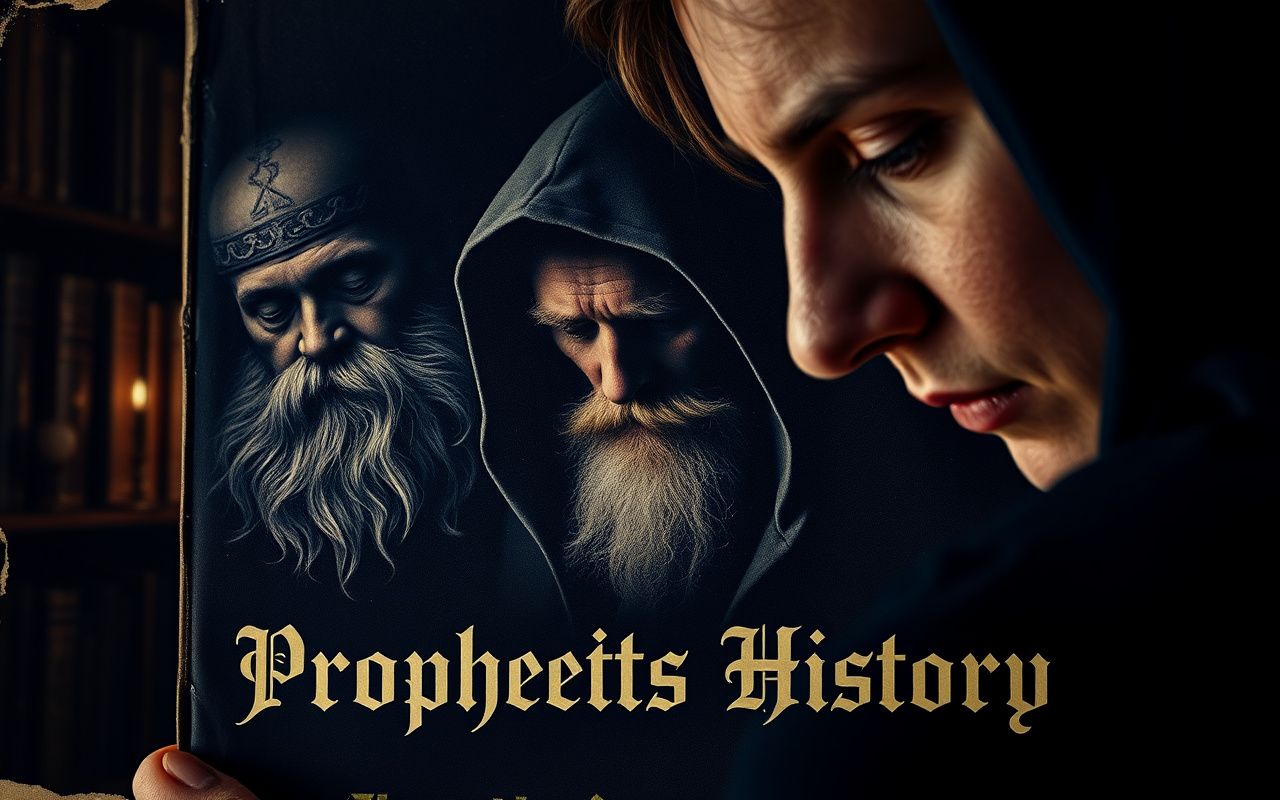
I remember the first time I stumbled across a dusty copy of a magazine called "Mysteries and Riddles" at a flea market. The cover promised revelations from Nostradamus, predictions from Rasputin, and warnings from a monk named Abel. I bought it for a dollar, and I read it cover to cover. It made me wonder: why have prophets been with us for centuries, and why do we still seek them out?
In folklore, seers have always held a special place. They were consulted by kings, feared by priests, and sometimes burned at the stake. Historical records show that figures like the French astrologer Nostradamus or the Bulgarian mystic Baba Vanga attracted followers from all walks of life. Some practitioners believe that certain individuals are simply born with a gift for glimpsing what lies ahead. Whether or not that's true, the fascination is undeniable.
The Prophets We Know
When people talk about famous prophets, a few names always come up. Nostradamus, a 16th-century French apothecary, wrote quatrains that some claim predicted the Great Fire of London, the rise of Napoleon, and even the attacks of September 11. I'm not sure whether those interpretations hold water, but the fact that people still debate them shows how powerful his legacy is.
Then there's Edgar Cayce, the "sleeping prophet" of the 20th century. While in a trance, he gave thousands of readings on health, past lives, and future events. Some of his predictions, like the discovery of the Dead Sea Scrolls, came true. Others, like a dramatic shift in the Earth's poles, did not. Yet for many, his accuracy rate was impressive enough to keep his followers loyal.
Rasputin, the mad monk of Russia, is another figure surrounded by prophecy. According to some traditions, he predicted his own death and the downfall of the Romanov dynasty. Whether he had genuine insight or just a talent for self-promotion is hard to say. His story remains a compelling example of how prophets can shape history.
Writers as Prophets
One thing that surprised me when I read that magazine was the idea that writers can be prophets too. Fyodor Dostoevsky, for instance, wrote about characters who seemed to anticipate the political turmoil of the 20th century. Ray Bradbury's Fahrenheit 451 predicted earbuds and flat-screen TVs long before they existed. Some people call this coincidence. Others see it as a form of mystical insight.
Historical records show that many authors have claimed their stories came to them in dreams or visions. Mary Shelley said Frankenstein came to her in a waking dream. Stephen King has described his novels as arriving fully formed. It makes me wonder if creativity and prophecy are closer than we think.
Of course, not every prediction comes true. The magazine I bought listed dozens of failed prophecies, from the end of the world in 1914 to the arrival of aliens in the 1980s. But that doesn't stop us from looking. As the editor of that magazine wrote, "our thirst to know the future is inextinguishable."
Why We Keep Coming Back
I think the reason we keep turning to prophets is simple: we want to feel prepared. In a chaotic world, the idea that someone knows what's coming is comforting. It doesn't matter if they're right or wrong. What matters is the hope that the future can be known, that we can face it with some sense of control.
In folklore, seers were often seen as bridges between the ordinary and the divine. They spoke in riddles, and their words were interpreted by priests or kings. Today, we have social media and YouTube channels, but the dynamic is the same. We look for signs, for patterns, for someone to tell us it will all be okay.
Some practitioners believe that prophecy is a skill that can be developed, like meditation or dream recall. Others think it's a gift that can't be taught. I don't know which is true. But I do know that as long as humans wonder about tomorrow, there will be prophets to guide us.
For entertainment purposes only.