When I first stumbled upon old Slavic protection spells, I was struck by one recurring figure: the grandmother. Not the mother, not the father, but the grandmother. In villages across Russia, Ukraine, and Belarus, it was the grandmother who whispered ancient words over a sleeping child, who bit a lock of hair to seal a blessing. I'm not sure why this role fell to her. Maybe because she had already raised her own children. Maybe because her love was seen as quieter, steadier, less anxious. Whatever the reason, these traditions paint a vivid picture of family protection.
The Grandmother's Shield: A Spell Against the Evil Eye
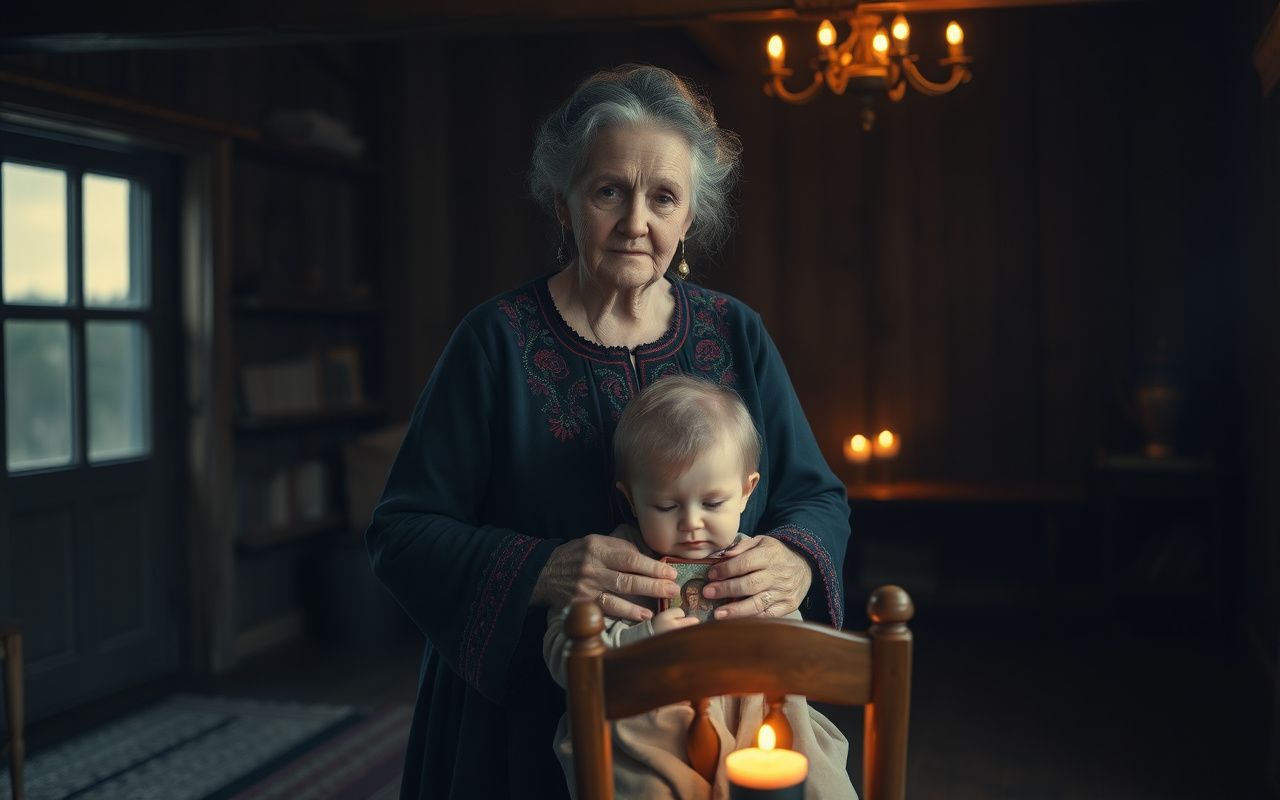
In Slavic folk tradition, babies were considered especially vulnerable to the evil eye. Their beauty attracted attention, and that attention could bring misfortune. Historical records mention that grandmothers often performed a specific ritual to ward off this harm. The spell required an icon, preferably one bearing the child's name. The grandmother would seat the child on a chair, place the icon in their hands, and stand behind them. Then, three times, she would bite the hair on the child's head and recite:
"Go away, trouble, disappear,
Hands of strangers,
Unkind eyes, evil tongues,
From the born servant, the baptized (name).
Let foreign hands grow numb,
Let enemies turn to stone,
Tongues be struck dumb,
Never to know evil trouble.
Key. Lock. Tongue.
Amen. Amen. Amen."
I find the image of biting the hair oddly tender. It's an intimate gesture, a physical claim. The grandmother wasn't just speaking words. She was marking the child as hers, protected by her own body. Some practitioners believe that the combination of touch, breath, and spoken word creates a stronger barrier than words alone.
A Slavic Blessing for Newborns: Bathing in Ancient Words
Another tradition comes from the time when midwives, known as povitukhi, attended births in rural Russia. They knew a variety of Slavic charms meant to give the newborn strength and health. Relatives would hide a few coins or a jug of milk to pay the midwife for reciting these blessings. One such charm, which has survived to modern times, is called "Baba Solomon's Bathing." It begins:
"Grandmother Solomonushka steamed baby Jesus in water.
She left steam on the baby's body.
Lord, bless!
Lord, help!"
The charm goes on to call for the baby's hands to grow strong, legs to walk steady, and tongue to feed the head. It mixes Christian imagery with older folk elements. I love how it addresses the baby directly, as if the words themselves are a kind of nourishment. The final lines ask the bathwater to listen, and the baby to drink milk and gain weight. It's earthy and practical, deeply loving.
Reconciliation Spell: Mending a Strained Relationship
Not all Slavic spells are for children. One that caught my attention is a reconciliation spell for parents and a grown son who has cut ties. The instructions say to read it during a waning moon, after visiting church and lighting candles for both parties. The spell calls on the Archangel Michael to ride a fiery horse with a sharp sword and rain of fire to bring about peace. It reads:
"Holy invincible and unspeakable power.
Mother of God, become my helper,
Intercessor before Archangel Michael.
Send me, servant of God (name), in the morning
Archangel Michael on a fiery horse
With a sharp sword, with a fiery rain.
By God's command,
To the servants of God (names) for quick reconciliation."
The dramatic imagery stands out. It's not a gentle plea. It's a call for divine intervention, almost military in tone. I'm not sure whether such forceful language actually helps mend relationships, but it reflects a belief that some rifts require more than human effort to heal. The spell can be recited by anyone, not just the parents. Reconciliation is seen as a community concern, not just a private matter.
For entertainment purposes only.