Walpurgis Night sits in the calendar at the exact hinge between winter and summer. April 30 to May 1. Pagan Europe knew it before Saint Walburga — a kind, real eighth-century English nun — was canonised on the same date in 870 and gave the night her name. The festival is much older than she is.
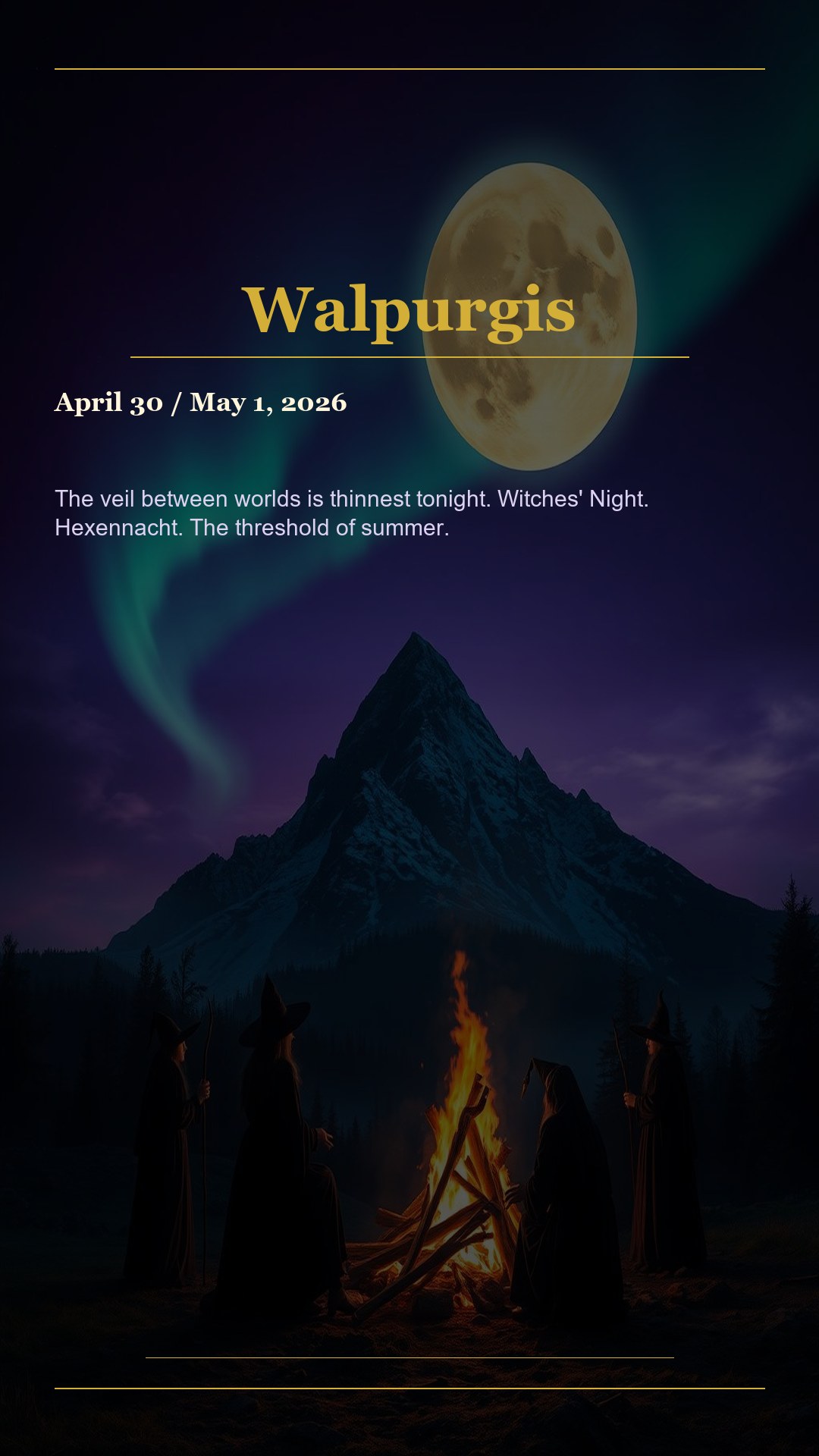
The German name Hexennacht tells you what villagers actually believed was happening: Witches' Night. The old folklore said witches gathered on the Brocken, the highest peak of the Harz mountains, to feast and dance until dawn. The bonfires lit in valleys across Germany and Scandinavia weren't decoration. They were protection — and a goodbye to winter that would not return until the wheel turned all the way back round.
Why Tonight Is Different
Most threshold nights in the wheel of the year — Imbolc, Beltane, Lughnasadh, Samhain — are quiet inward turns. Walpurgis is loud. It is the last permitted night of winter's energy. By dawn, the fire has eaten the cold, the herbs are hung, and the household is sealed for the warm half of the year. What happens between now and dawn carries weight all the way through to August.
This is also why the night attracted so much mythology around banishing. If something has been heavy for you all winter — a habit, a fear, a relationship that drains you — Walpurgis is the traditional moment to name it out loud, write it down, and burn the paper. The folk-magic logic: what you release tonight does not return with summer.
The Four Protective Herbs
European Walpurgis traditions consistently name four:
- Birch — first tree to leaf in spring, carrier of fresh starts and gentle cleansing. A small birch branch on the doorframe or above the bed is the classic Walpurgis ward.
- Juniper — the smoke that banishes. Burned dry on charcoal or as smouldering twigs through every room of the house.
- Rowan (mountain ash) — the witch's tree. A rowan-twig cross tied with red thread, hung over the threshold, is protection passed down for at least a thousand years in Northern Europe.
- Rosemary — for clarity and remembrance. A sprig by the bed for clear dreams.
A Five-Minute Ritual
You do not need a bonfire on a mountain. The structure of the ritual is what matters, not the scale.
- Open a window at midnight (or as close to midnight as your schedule allows).
- Light a single white candle. White is the Walpurgis colour — the colour of the May Queen, the colour of the dawn that will come.
- Speak aloud, or write down, three things you are releasing. Saying them is half the ritual; the body needs to hear it.
- Burn a sprig of juniper or rosemary. If you cannot burn anything, hold the herb above the candle's heat until the oils release and you smell them. Walk through the room.
- Speak aloud what you welcome into summer. Be specific. The old rule: name what you want, not only what you do not.
Then let the candle burn out on its own if it is safe to do so. Tomorrow is Beltane, May Day, the lighting of the May fires. If you sleep with the window open and the window faces east, the first light that wakes you carries the new season. That is the entire point.
One Last Thing
Walpurgis is a night for women particularly — the German folklore is explicit about it. The witches of Brocken weren't a metaphor for evil; they were the wise women, the herbalists, the village healers, the keepers of the calendar. To mark Walpurgis is, in part, to take a quiet place in their line.
If tonight you light one candle and name one thing — that is enough. The fire knows how to do the rest.